
Custom boxing gloves with logo branding are how most combat-sports brands, gyms and fight clubs get a product that is truly theirs. Instead of reselling someone else's brand, you sell gloves designed in your colors, with your name on the back of every hand that hits a bag in your gym or in your customers' homes.
This guide explains the decisions involved in ordering private label boxing gloves: materials, logo placement, colorways, finishes and packaging. It then walks through the ordering process from first inquiry to delivery, so you know what to prepare and what to expect.
Why brands and gyms order custom boxing gloves
- Brand building. A glove with your logo is a walking advertisement in every gym, video and social media post.
- Margin. Private-label products let you set your own retail price instead of competing on someone else's brand.
- Differentiation. Custom colorways and graphics make your gloves recognizable at a glance.
- Gym and team identity. Clubs use branded gloves for members, fighters and merchandise.
Step 1: Choose the base glove
Most custom orders start from an existing model, which is faster and more predictable than designing from scratch. Pick the base glove by who will use it.
| Use | Typical glove | Closure | Weights |
|---|---|---|---|
| Fitness classes, beginners | PU training glove | Hook-and-loop | 8oz–14oz |
| Bag and pad work | Leather or PU training glove | Hook-and-loop | 10oz–16oz |
| Sparring | Leather training or sparring glove | Hook-and-loop or lace-up | 14oz–16oz |
| MMA / grappling | Open-palm MMA glove | Hook-and-loop | 4oz–7oz |
| Competition-style | Leather lace-up glove | Lace-up | Per the rules you train for |
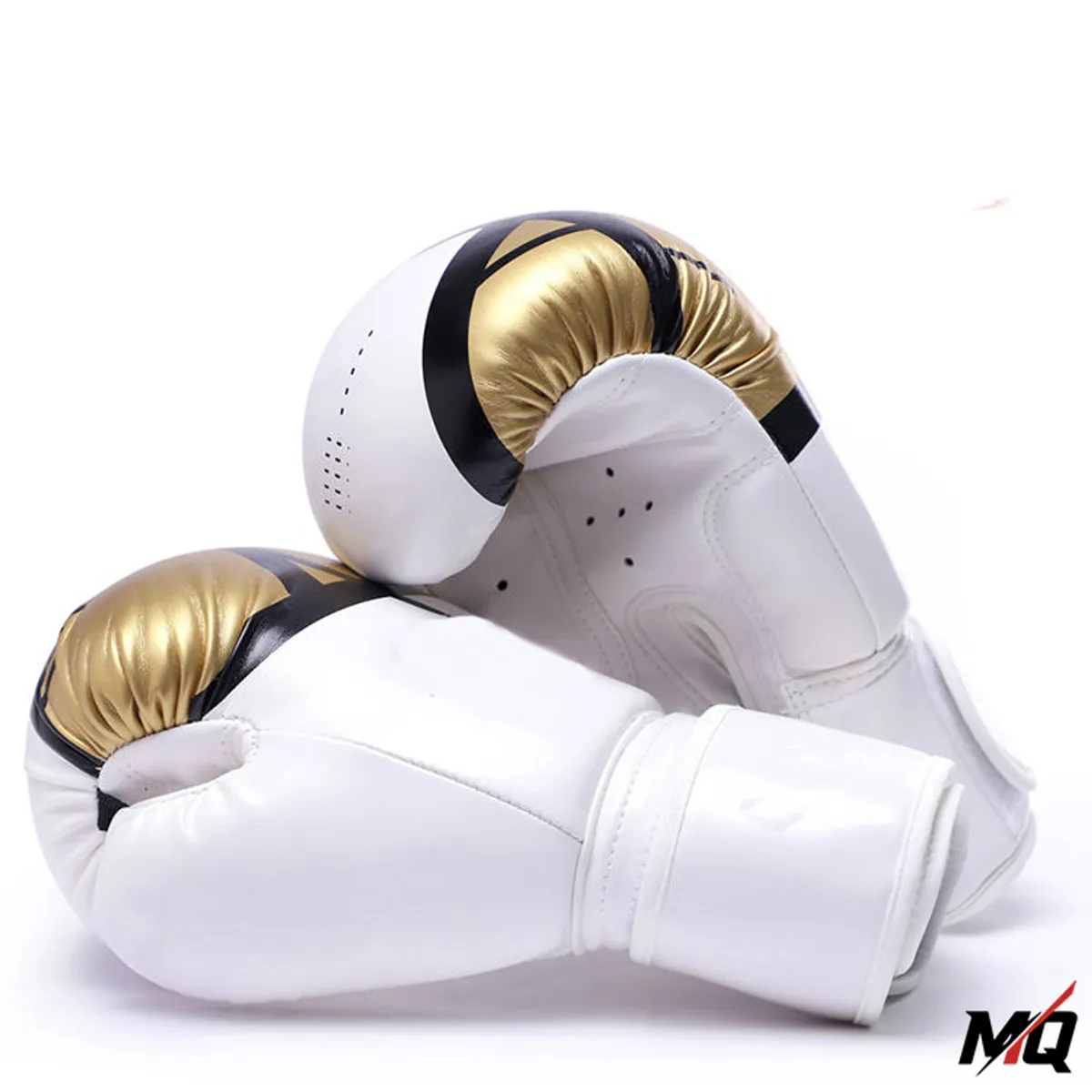
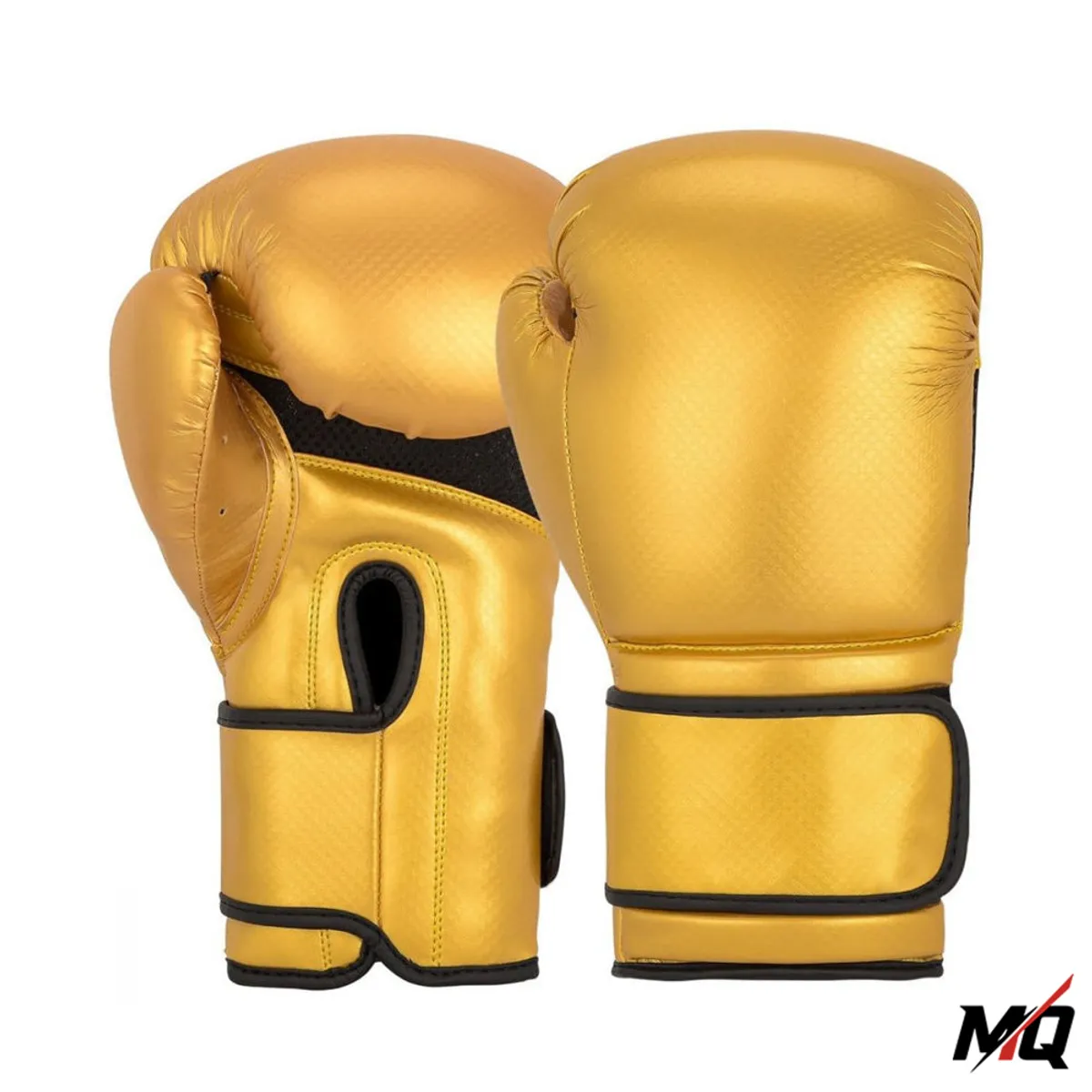
You can browse our wholesale boxing gloves to find a starting point. For example, the lace-up leather MMA & Sanda gloves and the metallic gold printed PU gloves show two very different directions a brand can take.
Step 2: Choose the material
Your material decides the glove's feel, durability and price point.
- Genuine leather: premium feel, long life, molds to the hand. Best for higher price points and serious training.
- PU (synthetic leather): lower cost, easy to clean, and ideal for bold colors, metallic finishes and printed graphics.
If you're unsure which suits your customers, read our comparison of genuine leather vs PU boxing gloves.
Step 3: Decide logo placement and size
Boxing gloves offer several branding positions:
- Back of the hand. The main brand panel and the most visible spot, both in the gym and on camera.
- Wrist cuff or strap. Ideal for a secondary logo, a wordmark or a slogan.
- Thumb. A small mark or icon.
- Palm or inner cuff. Discreet details such as a model name, weight or size.
- Lining and labels. Woven or printed labels inside the cuff.
Keep the main logo simple. Fine details and thin lines can be lost on curved, padded surfaces, so send a clean vector file and expect the manufacturer to suggest adjustments if part of the design won't reproduce well.
Step 4: Choose how the logo is applied
Different branding methods suit different materials and designs. At Malqor International, logos are applied by a method chosen to suit the glove's material and your artwork. When you send your artwork, tell us the look you want (subtle, bold, metallic, tonal) and we'll recommend the method that suits the glove's material and your design.
Step 5: Build your colorway
A colorway covers every visible part of the glove:
- main shell color
- accent panels and trim
- cuff and strap color
- piping and stitching thread
- lining color
Two or three colors usually look stronger than five. Many brands create one signature colorway, then add a black or white version for broader appeal. Send Pantone references if you have exact brand colors.
Step 6: Specify weights and size run
Decide which weights you'll offer and how many of each. A typical retail split favors the middle weights (12oz and 14oz), with fewer 8oz/10oz and 16oz pairs. Our boxing glove sizes and weights guide explains which weights suit which customers.